
Key Takeaways
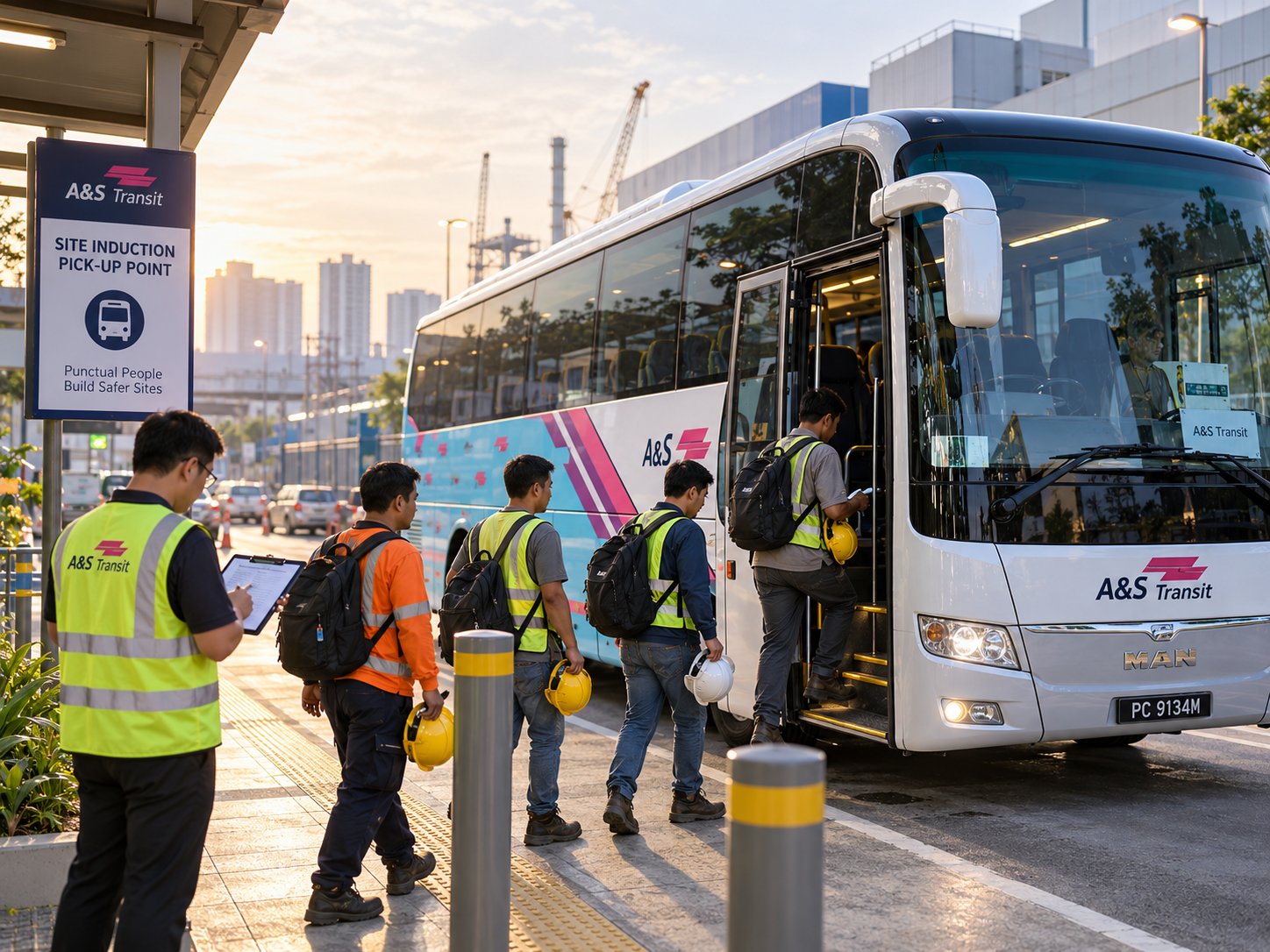
- New worker transport should be planned around the induction schedule and the time needed for site entry.
- Work backwards from the briefing time when setting pickup and arrival times.
- Give every worker clear instructions on the pickup point, site gate, reporting contact and where to go after arrival.
- Allow enough time for registration and entry checks, while keeping transport coordinators and site contacts aligned if plans change.
Introduction
New worker arrival days can become busy before the briefing begins. Workers may be finding an unfamiliar gate, completing registration, clearing entry checks, and locating the briefing area. Site induction planning sequences these steps so the group knows how it will reach the site, where it should report and what happens after alighting.
At A&S Transit, we see transport as part of first-day readiness. In practice, that means planning the route, arrival window, drop-off point and coordination with the site contact around the briefing schedule.
When workers travel together and arrive with enough time for pre-briefing steps, supervisors spend less time chasing individuals or repeating directions. Punctuality matters, but the wider goal is to get the group to the reporting point with enough time to complete registration and entry checks before the briefing begins.
Why Site Induction Planning Starts Before Workers Reach The Gate
Site induction planning starts before anyone reaches security. We account for pickup, travel, alighting, registration, entry checks, and the walk to the briefing area. For first-time teams, the final few minutes can create uncertainty. Confirm the correct entrance, waiting point, receiving contact, and post-drop-off direction before the bus leaves.
Confirming Transport Details Before Induction Day
Give every worker the same essentials before reporting: pickup time, meeting point, bus arrangement, site gate, and contact person. Keep the message easy to scan. We also separate transport instructions from the site’s induction content. This keeps first-day communication focused while supporting the broader need for safe transportation of workers travelling to and from site.
New Worker Arrival Days Need A Different Transport Approach
Regular worker routes benefit from repetition. Transport for new workers does not have that same familiarity. A group may travel only once for induction, onboarding, or its first reporting day, so we plan for unfamiliar pickup routines, questions before departure, and extra movement after arrival. A one-day charter may therefore fit better than setting up recurring transportation for workers when the need is only temporary.
Matching Transport Timing To Induction Briefing Schedules
Treat the briefing start as the fixed point. From there, work backwards through walking time, gate clearance, registration, alighting, travel, and boarding. When planning the arrival of an induction group, check what else is happening at the site too. Several subcontractor teams reaching one entrance together can create delays even when every vehicle is punctual.
Registration Timing And Site Entry Checks
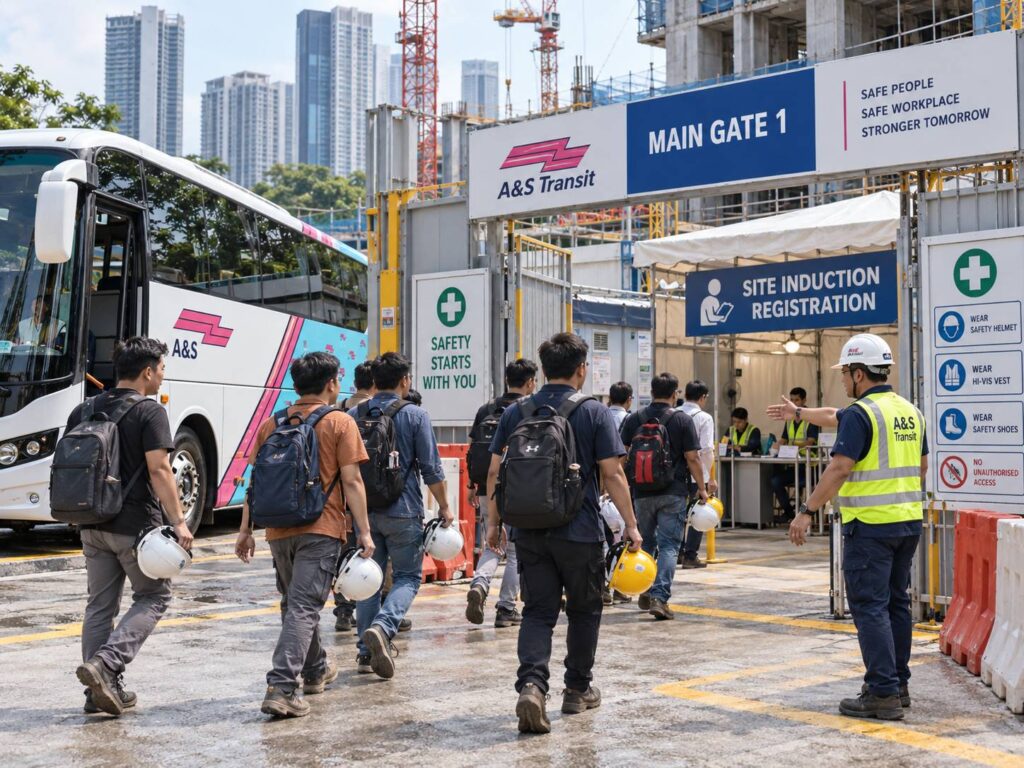
First-time registration can take longer than familiar daily entry. Identification checks, access verification, passes, and directions all add time when a group arrives together.
At A&S Transit, we consider site entry when setting the group’s timing, rather than treating the gate as the finish line. The buffer should protect the briefing without leaving workers waiting unnecessarily long.
Temporary Charter Needs For Induction Groups
Some projects need transport for one induction date, a short onboarding period, or several intake days. A charter bus rental can match a specific group, route, and reporting time without creating an unnecessary daily service. This works particularly well when the transport requirement is tied only to onboarding or first-day reporting rather than an ongoing worker route.
Coordinating Group Arrival For First-Time Site Teams
Arriving together gives supervisors one group to receive, count, guide through entry, and direct towards the briefing area. Site induction planning makes that first handover more manageable. Separate arrivals can mean repeated calls, workers waiting at different gates, and repeated directions. Coordinated transport gives both your workers and site team a clearer starting point.
Clear Arrival Instructions Reduce Confusion
Tell workers exactly what they need at each stage: pickup point, departure time, bus identifier, gate name, useful landmark, reporting contact, and where to go after alighting. If details change, update one shared instruction instead of letting multiple versions circulate. Simplicity matters because first-time workers are already processing an unfamiliar route and site layout.
Planning Drop-Off Points Around Site Access
The nearest gate is not always the best drop-off point. At A&S Transit, we consider whether the bus can enter, turn, stop, or wait without disrupting site traffic, then look at the walking route to registration and available gathering space. Where buses must stop nearby, the driver, coordinator, and site contact should agree on the approved handover point beforehand.
Timing Buffers For First-Time Site Movement
First-day movement needs more allowance than a familiar commute. Gathering, boarding, headcounts, instructions, entry checks, and finding the briefing room can each take longer. At A&S Transit, we size the buffer to the site rather than applying one standard number. Multiple subcontractors, limited waiting space, strict access procedures, or a longer internal walk can all change what is realistic.
Communication Between Transport Coordinators And Site Contacts
The transport coordinator should know the arrival time, access route, drop-off point, waiting restrictions, and site contact. The site contact should know the expected headcount and vehicle timing. If the gate becomes congested or the briefing location changes, one clear contact chain lets both sides adjust quickly without leaving workers to interpret conflicting instructions.
How Flexible Transport Planning Supports Induction Days
Site induction planning should follow the project schedule, not a fixed transport template. One project may need a single charter, while another may need several trips across different intake dates. Vehicle choice can also change with the group size. For example, a 19-seater bus may be suitable for a smaller intake, while larger groups may require a higher-capacity vehicle. Pickup points and arrival windows can then be adjusted around each group’s reporting requirements.
That flexibility reflects how we operate at A&S Transit. We support ad-hoc and recurring trips, point-to-point and block bookings, and bus capacities from 10 to 45 seats. With more than 30 years of industry experience and a fleet of over 100 buses, we can match different induction group sizes and reporting arrangements with suitable vehicle capacities and trip formats.
Conclusion
Your next induction day should start with a transport plan that workers and site contacts can follow easily. Before contacting A&S Transit, prepare your expected headcount and pickup point. Confirm the site gate, briefing time and preferred arrival window as well.
Contact us with those details to arrange transport for your upcoming worker induction or first reporting day.